

What do you need for client onboarding? You need the key project, contact, approval, access, legal, and payment details before work starts.
Collecting this information early gives the project a straightforward structure, reduces delays, and helps keep delivery and invoicing on track.
How Good Onboarding Supports Better Delivery
A project can slow down when the basics are missing.
The brief is incomplete. Feedback comes from the wrong person. Files arrive late. Billing details are unclear. Then the work becomes harder to manage and approvals take longer than they should.
An onboarding process helps prevent that. It gives you a stronger starting point and gives the client confidence in how you work.
It also protects your time. When expectations are set out from the start, the project is easier to run from first draft to final delivery.
What Do You Need for Client Onboarding?
You need the information that shapes the work before any deliverables are produced.
That includes:
who the client is
what they need
who approves the work
what files and access you need
how communication will run
how payment will be handled
Confirm these points and your project will be easier to manage and easier to deliver.
Client Business and Billing Details
Start with the business information you need for clean administration.
That includes the client’s legal business name, billing contact, company address, and any VAT or purchase order details linked to invoicing. These details help you issue accurate invoices and reduce the risk of payment delays later.
This part looks simple, but it sets the tone for the rest of the project. When admin starts in good order, the workflow usually stays in better shape.
Main Point of Contact and Approval Chain
Do not assume one person will manage every stage of the project.
You need to know who handles day-to-day communication, who gives feedback, who approves drafts, and who signs off the final work. Without that clarity, projects often stall during review because the wrong person was asked to respond.
Project Scope and Deliverables
The scope should be defined before any work begins.
Confirm exactly what you are delivering, how many deliverables are included, what format is required, what the fee covers, and what sits outside the scope. This gives both sides a shared view of the work.
A structured scope also helps you deal with extra requests if the brief starts to expand.
Worth a look: How to Pitch Yourself to Clients (With Templates)
Timeline, Milestones, and Deadlines
Every project needs a schedule that both sides understand.
Confirm the kick-off date, draft dates, review windows, milestone approvals, and final delivery deadline before work starts. This creates a defined structure for the work ahead and reduces confusion around timing.
It also cuts unnecessary pressure later. When dates are agreed early, feedback and approvals are easier to manage.
Brand Assets, Files, and References
Creative and marketing work can lose pace quickly when files are missing.
Ask for the core materials upfront, including logo files, brand guidelines, previous materials, design files, copy documents, and a few reference examples. These help you align with the client’s brand from the start instead of correcting direction later.
Even for non-creative projects, reference material still helps. It gives context around tone, positioning, standards, or internal expectations.
Access and Permissions
If the project depends on platforms, accounts, or shared systems, access should be arranged early.
This can include website logins, analytics access, social media permissions, advertising account access, shared folders, and project management tools. Without access, the project can stall even when the brief is strong and the timeline is agreed.
Goals, Audience, and Success Criteria
A strong onboarding process should also cover the purpose behind the work.
You need to know who the audience is, what the client wants the project to achieve, what outcome comes first, and how success will be measured. These answers support better decisions during delivery.
Legal and Admin Documents
A project should begin with written clarity.
That can include a signed proposal, agreement, NDA, scope approval, vendor form, or internal onboarding form. The exact document set depends on the project, but the principle stays the same. Key terms should be confirmed in writing before work starts.
This protects the working relationship and gives both the client and freelancer a record of what was agreed on.
Payment Terms and Invoice Details
Payment terms should be agreed before any deliverables are sent.
Confirm the total fee, any deposit, the due date, the invoice contact, the payment method, and any purchase order reference before delivery starts. This reduces friction and gives you a clean route for follow-up if payment needs attention.
Communication Rules
Agree on the main communication channel, expected response times, feedback turnaround, meeting rhythm, and update frequency. This keeps the workflow steady and stops small questions from turning into bigger delays.
What Goes Wrong When You Skip Client Onboarding?
When onboarding is rushed, the same issues tend to appear again and again.
The scope is vague. Key files are missing. Too many people send feedback. Approvals take longer than planned. Billing details are incomplete. Payment follow-up becomes harder. The project expands without a change in fee or timeline.
A Client Onboarding Checklist That Supports Smoother Invoicing and Admin
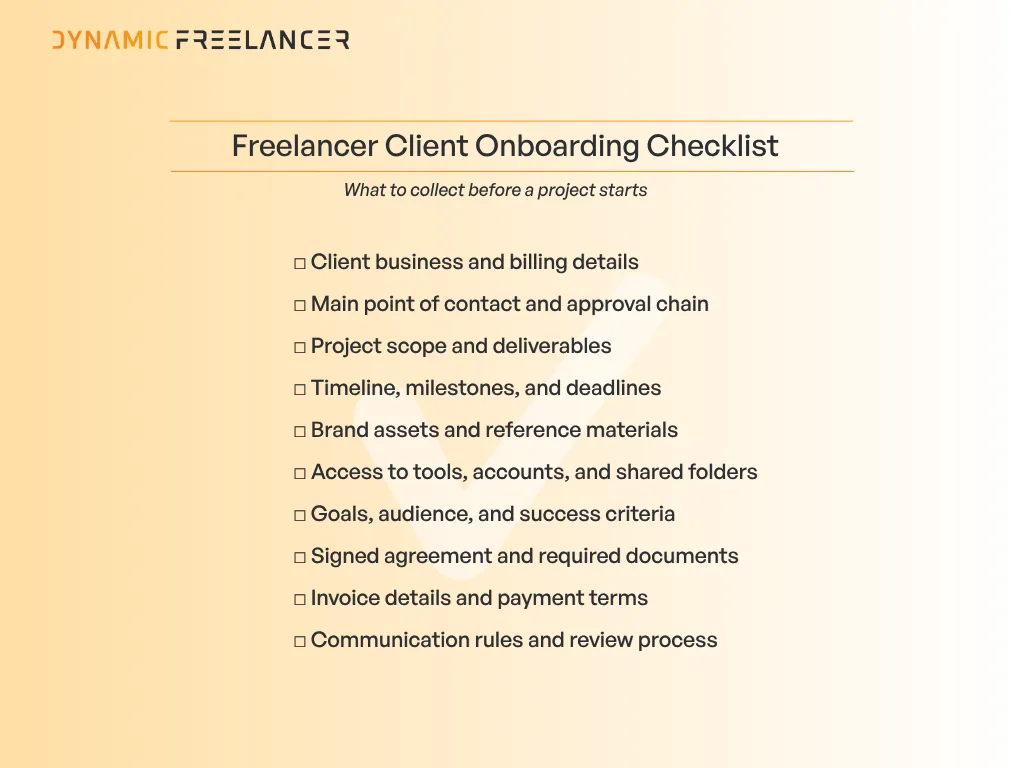
This information will give you everything you need to start the project. It also helps you handle invoicing, payment follow-up, and project admin with more control.
How Dynamic Freelancer Supports Better Client Onboarding
At Dynamic Freelancer, we support independent professionals who want a simple way to manage freelance work in the UAE.
Through Freelance Central, users can add clients, raise invoices, track payments, request official letters, and view visa or document status. We also provide onboarding support, document guidance, platform assistance, and in-house HR support for letters and queries.
That support strengthens the onboarding process. Once the client details are in place, the platform helps freelancers manage admin, clients, and invoicing in one place instead of chasing it across email threads and separate tools.
This is where a good onboarding checklist becomes more than a general habit. It becomes part of a cleaner freelance workflow that supports client management, invoicing, payment tracking, and organised administration.
Conclusion
When onboarding a client, you need the information that shapes the project before any work begins.
That includes business details, billing contacts, scope, deadlines, approvals, assets, access, documents, and payment terms. When those details are collected early, projects run more smoothly and with fewer delays.
Frequently Asked Questions
Find answers to common questions about this topic
What is a client onboarding checklist?
Why is client onboarding important for freelancers?
What details should I collect during client onboarding?
How can Dynamic Freelancer assist with client onboarding?
What happens if I skip client onboarding?
Disclaimer: This article is intended to provide practical, up-to-date information. Details may vary based on individual circumstances, location, or changes in regulations. The information provided is for informational and educational purposes only.